The central decision
What information would change the action?
When records are incomplete, the first job is to distinguish three questions: what infrastructure exists, what can go wrong, and what evidence is worth collecting before acting.
A decision-oriented assessment sequence
Establish what is known
Collect construction and repair records, operating history, mapping, known appurtenances, and maintenance experience. Explicitly identify missing information instead of treating it as certainty.
Prioritize by risk and consequence
Separate consequences of failure from the available evidence about likely failure mechanisms. Use a repeatable screening approach to decide where further attention has value.
Choose proportionate field work
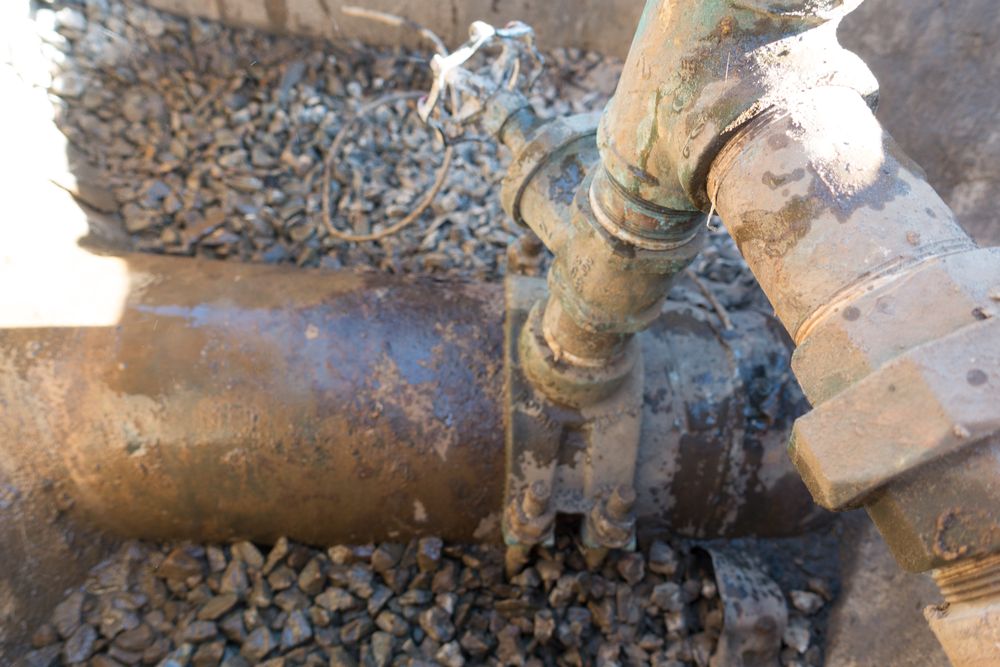
Field location, appurtenance assessment, wall-thickness testing, or direct examination answer different questions. The appropriate method depends on pipe material, access, failure mechanism, and decisions the agency faces.
Translate findings into a decision
Compare continued operation, targeted maintenance, further testing, rehabilitation, or replacement using the evidence obtained and the costs and consequences of each option.
Keep the evidence usable
Document assumptions, uncertainty, and results in a form agency managers and O&M staff can update and use when conditions change.
Three agency examples
City of Sacramento: start with a critical main
EEI's Sump 85 work combined records, risk modeling, field location, and ultrasonic testing. The program identified many undocumented appurtenances and provided a template for subsequent force main assessment work.
Project evidence →
City of Davis: investigate a specific condition question
EEI used records, ground-penetrating radar, risk modeling, and direct measurement of corrosion pitting on an excavated section of the SLS-1 main to inform decisions about replacement and alternatives.
Project evidence →
San Rafael Sanitation District: keep the model current
A GIS-based risk model for 774 force main segments provides a continuing framework for prioritizing assessments and connecting results to a replacement CIP.
Project evidence →Questions worth bringing to a technical discussion
- Which missing records or field observations could materially change the decision?
- Are we comparing condition evidence with consequences of failure, or conflating the two?
- Would an initial, limited field investigation narrow the options enough to avoid an unnecessary larger assessment?
- How will operators and asset managers maintain the evidence after the study?
This is a general decision framework, not a site-specific condition assessment or substitute for engineering investigation. Testing and field work require qualified personnel and appropriate safety procedures.